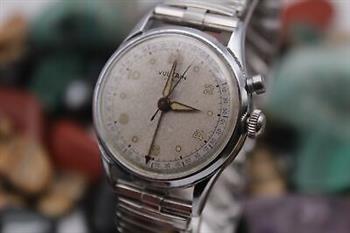
The Art of Watchmaking
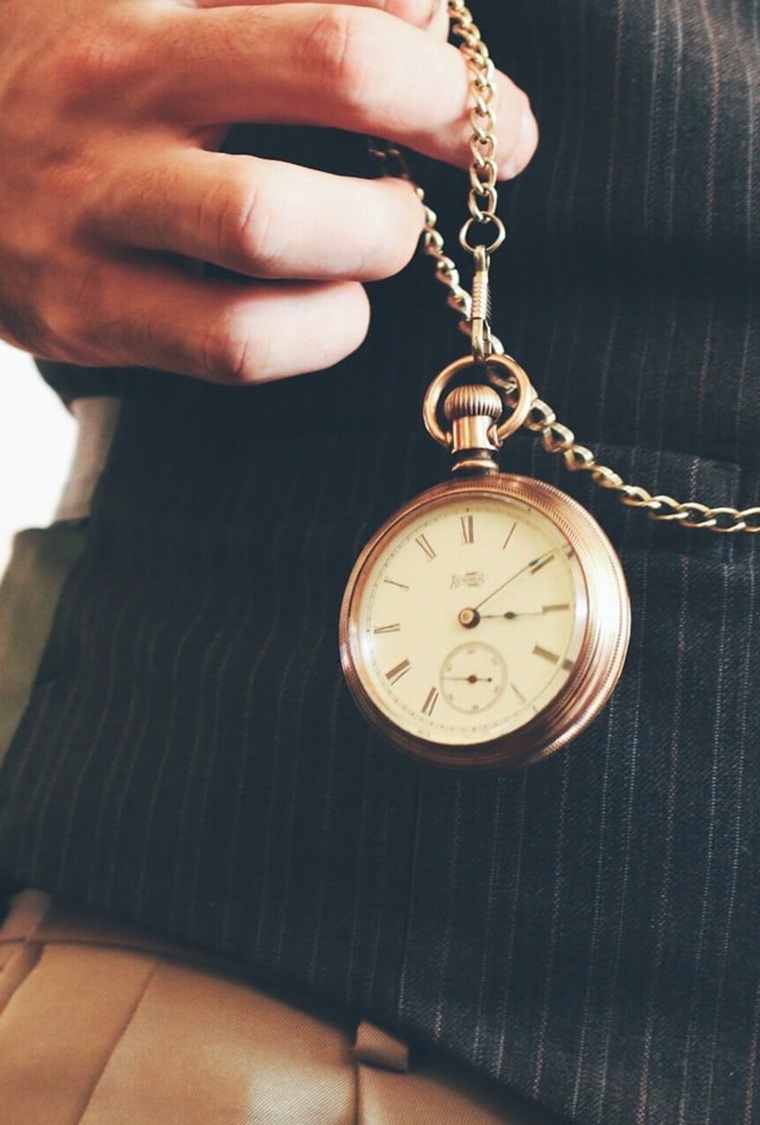
Horology is a centuries-old profession that combines technical expertise and logical reasoning with a focus on patience, accuracy, and attention to detail.
Watchmaking got its start when portable spring-driven clocks developed into tiny personal timepieces in 16th-century Europe. Around 1510, the first pocket watches were successfully produced. Over the centuries, horology advanced from simple, imprecise jewellery to precise mechanical movements, wristwatches, and electronic quartz technology.
This specialized craft cannot be learned effectively through books or videos alone. There are two main paths to becoming a professional watchmaker, each offering different advantages in terms of cost, duration, learning style, and career preparation.
Watchmaking schools offer formal training, combining theoretical knowledge with hands-on practice. Accredited institutions offer comprehensive programs over 1-3 years to reach the basic grade of watch technician. These programmes are usually held every other year with limited placements and typically start at around €15,000 a year. Subsequent studies are needed for specialisations and each level is a distinct course with its own fees. The programmes provide a structured curriculum covering horology theory, movement mechanics, repair techniques, and business skills. While these courses offer an in-depth look into the world of historical, theoretical and practical horology, the language in which the courses are carried out may prove to be a deterrent to a lot of aspiring watchmakers.
Long before watchmaking schools, watchmakers learnt the craft through apprenticeships with master horologists. Learning directly from experienced professionals offers personalized instruction and immediate exposure to real customer work. This is still the main choice for the majority of prospective watchmakers. Experience is built by learning and further developed through practice and mentoring by a senior watchmaker. Apprentices typically start with basic tasks while gradually taking on more complex work, with compensation increasing with skill development.
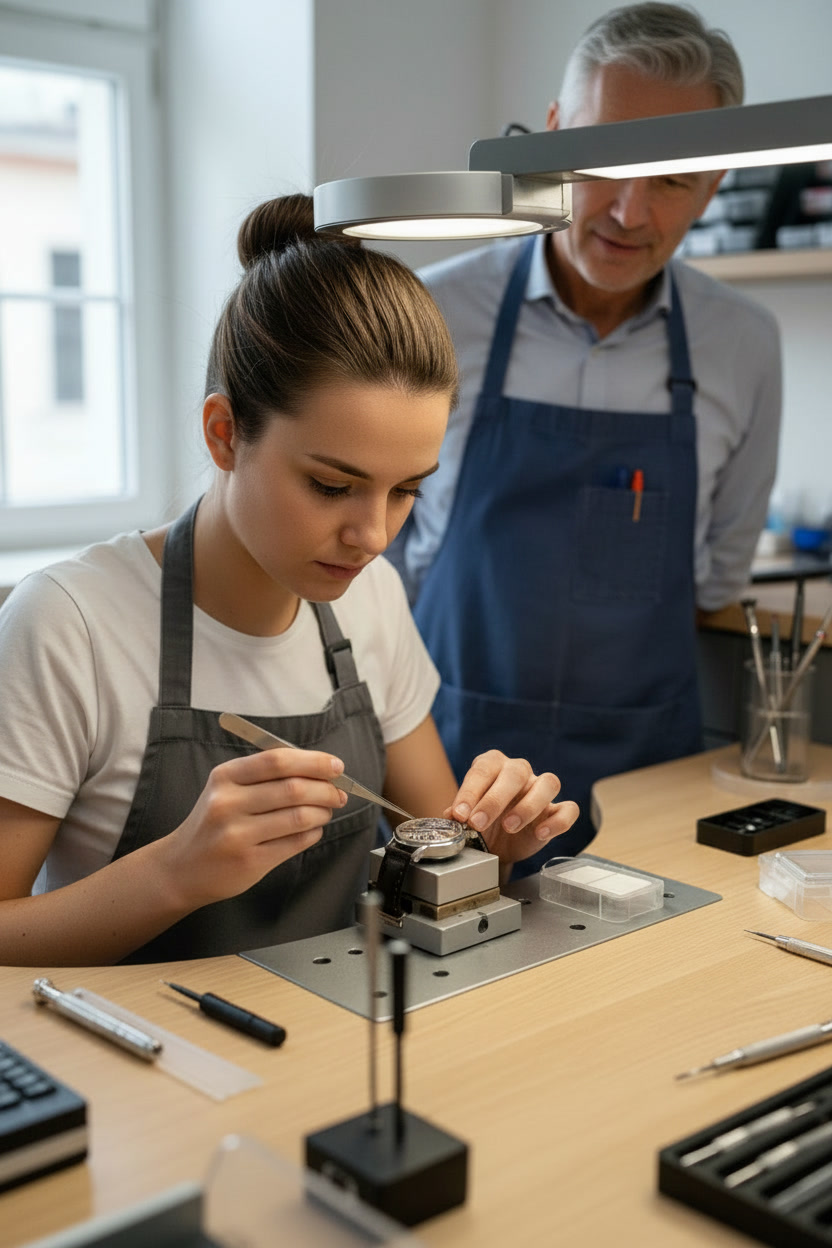
Most successful watchmakers combine formal education with years of additional on-the-job experience, as the field requires both foundational knowledge and practical wisdom that only comes through direct handling of timepieces.
While a new generation of watch microbrands is emerging because of a resurgent interest in luxury timepieces, most contemporary watchmakers maintain, repair, and restore timepieces rather than creating new ones from scratch. A watchmaker's duties include identifying movement issues, performing complex repairs, and thoroughly testing timepieces to guarantee they adhere to stringent accuracy requirements. Because watchmakers frequently handle tiny, nearly microscopic pieces while using strong magnification equipment, the ability to concentrate, focus, and maintain steady hands is essential. Effective management of repair schedules and customer communication are also essential to becoming a successful watchmaker.
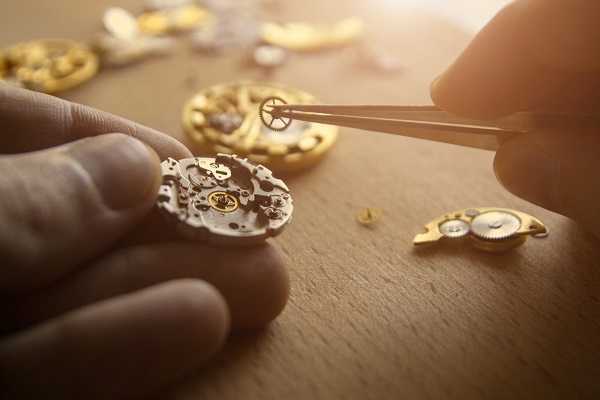
While some people naturally possess specific qualities that help in watchmaking, most talents can be acquired with practice and appropriate instruction. Having durable and fine tools is important, but it is crucial to understand the different tools and their purposes, and practice working with them. Practicing fundamental skills like proper screwdriver use, tweezer handling, and component placement through repetitive exercises builds muscle memory and confidence. It is important to master each step completely before progressing to more complex procedures, repeating the same actions until they become automatic responses rather than conscious decisions, as haste often leads to confusion and damaged components. Disassembling and reassembling the same movement several times, emphasises smooth, confident gestures over speed or efficiency. This skill in manual dexterity can be developed further through activities like drawing, model building, or playing instruments, and continues improving throughout a watchmaker’s career. Poor coordination can result in expensive errors and make it very difficult to handle sensitive parts without causing damage. Having an experienced mentor to guide you through these steps will prove indispensable.
Since watches are intricate and delicate, attention to detail is essential. Watchmakers must detect minute faults, notice when components are slightly out of line, and identify issues that could reduce timekeeping accuracy by seconds every day. This skill requires both visual acuity and mental discipline to stay focused during long, repeated tasks. Developing attention to detail necessitates developing organized work habits, taking frequent pauses to retain concentration, and learning to slow down rather than speed through intricate operations. Professional watchmakers emphasize that good organisation prevents lost parts and reduces the stress that leads to rushed work and mistakes. Create a clean, well-lit, dust-free work area with a watchmaker’s desk mat for easy part visibility and organisation. Develop systematic documentation habits by photographing each disassembly step, labelling component positions, and maintaining detailed notes on screw locations and assembly sequences.
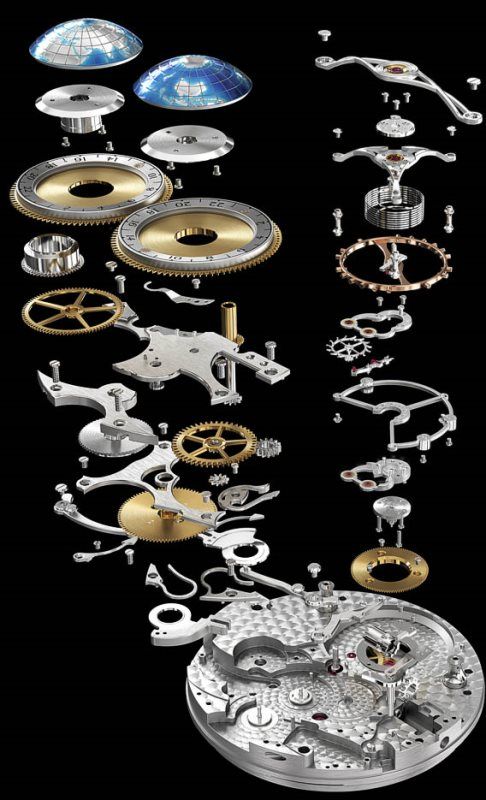
Diagnosing timing issues, mechanical failures, or unusual symptoms requires logical thinking and the ability to systematically eliminate possible causes until the root cause is identified. Experienced watchmakers develop pattern recognition, which allows them to swiftly spot common difficulties, but unexpected problems require methodical troubleshooting techniques. This skill improves through education in mechanical principles and years of hands-on experience with different types of problems.
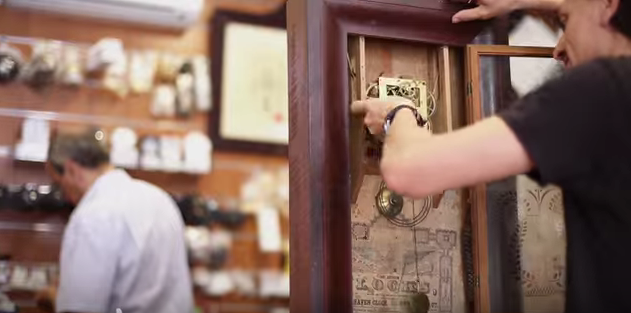
Starting your practical watchmaking journey requires careful planning and realistic expectations, as working with mechanical timepieces demands patience, proper preparation, and acceptance that mistakes are part of the learning process. The initial months of hands-on practice often feel overwhelming as beginners struggle with tiny components, unfamiliar tools, and the precision required for successful assembly, but persistence through this difficult phase builds the foundation for all future watchmaking skills. The key to successful beginnings lies in choosing appropriate practice pieces, creating a proper workspace, and developing systematic approaches to disassembly and reassembly that build confidence gradually. Most experienced watchmakers emphasise that the transition from theoretical knowledge to practical work is the most challenging phase, where abstract concepts become tangible skills through repetitive practice. Understanding common beginner pitfalls helps new watchmakers avoid costly mistakes while building the muscle memory and problem-solving skills essential for professional work.
The demand for skilled watchmakers remains high, offering excellent career growth opportunities and the potential for entrepreneurship. Pursuing this vocation requires dedication, proper training, and a genuine passion for precision mechanics. Our history at S.Demanuele began more than a century ago and the craft, and the passion for the craft, were passed down from father to son. Each generation also continued to develop its understanding of the latest technological advances in the world of horology and consequently can provide expert advice on a wide range of timepieces, from vintage pocket watches, to antique clocks, to today’s sophisticated complications. Being one of the most renowned horologists in Malta, S. Demanuele is looking to expand its operations and recruit new talent. If you have a passion for the trade and the dedication to pursue a career in horology, we’d love to hear from you.
References:
How to Start a Watchmaking Career: Beginner's Guide | Nobbier
How to Become a Watchmaker in 2026 | Beginner's Guide
Understanding the Watchmaker Role & How to Become One | Jul 10, 2026
Master The Art: How To Become A Watchmaker With Precision & Passion!
How To Get Into Watchmaking As A Hobby: A Beginner's Guide
Master The Art: How To Become A Watchmaker With Precision & Passion!